



Cubic zirconia (CZ) is a man-made gemstone that looks like a diamond. It shines brightly but costs much less. This guide explains what cubic zirconia is and how it is made. You will also learn how it differs from real diamonds and how its value is judged. The article covers its history, uses, and how to care for it. CZ is not only used in jewellery but also in medicine and industry. Whether you are buying or just curious, this guide will help you understand this beautiful and affordable stone.
What is Cubic Zirconia?
Cubic zirconia (CZ) is a crystal made from zirconium dioxide (ZrO₂). It is a man-made gemstone created in a lab to look like a diamond. The material is hard, clear, and sparkles brightly, though it is softer than a real diamond. The “cubic” part of its name refers to its crystal structure, which mirrors that of a diamond. Unlike zircon, a natural stone made from zirconium silicate (ZrSiO₄), cubic zirconia shows a rainbow-coloured flash and can be made in many colours. It is popular in the UK jewellery market for being affordable and visually stunning.
What Is the Manufacturing and Synthesis Process of Cubic Zirconia?
Cubic zirconia (CZ) is a lab-made gemstone created from zirconium dioxide (ZrO₂). It occurs naturally in tiny amounts, but almost all CZ used in jewellery and industry is man-made. Zirconium dioxide melts at over 2,000°C, which makes normal melting methods impossible. To form large, clear crystals, manufacturers use a special method called skull melting.

The Skull-Melting Process
This process heats a mix of zirconium dioxide and a stabilising oxide at very high temperatures. The heat turns the mix into single cubic crystals. This method keeps the structure pure, stable, and even throughout the melt.
- Raw Materials and Stabilisation: The process starts with pure zirconium dioxide powder. A stabiliser such as yttrium oxide (Y₂O₃), calcium oxide (CaO), or magnesium oxide (MgO) is added. This helps the cubic crystal structure stay the same while cooling and stops it from changing shape.
- The “Cold Crucible”: The powder mix is placed in a hollow copper container called a “skull.” Water runs through copper pipes around the skull to keep it cool. This barrier stops the hot zirconia from touching the copper and keeps the material clean and stable.
- Induction Heating: Small metal chips are added to the powder. A radio frequency (RF) generator sends energy that heats the metal. The heat melts the zirconia powder from the inside out. This step creates a smooth, even melt.
- Controlled Crystallisation: When molten, zirconia becomes conductive and continues to heat itself. A thin outer layer of solid powder forms to hold the liquid inside. The temperature is then slowly lowered to cool the material evenly.
- Formation of Crystals: As it cools, long, clear cubic zirconia crystals grow from the bottom up. The speed of cooling and the amount of stabiliser decide the size and quality of each crystal.
- Finishing: After cooling, the solid crystals are taken out from the skull layer. They are then cut, shaped, and polished into gemstones used in UK and global jewellery markets.
Adding Colour
Pure cubic zirconia is colourless. Colour is added by mixing in metal oxides during heating:
- Green: Chromium (Cr) or Vanadium (V)
- Red: Iron (Fe)
- Yellow: Copper (Cu) or Iron (Fe)
- Pink/Orange: Manganese (Mn), Cerium (Ce), or Holmium (Ho)
Alternative Synthesis Methods
Some techniques make smaller or industrial-grade zirconia.
- Hydrothermal synthesis: This method grows tiny zirconia crystals in a sealed vessel using a heated solution. It allows accurate control of size and shape.
- Microwave-assisted method: A solution is heated quickly with microwaves to form zirconia fast and efficiently.
- Solution combustion method: A chemical reaction creates heat that forms fine zirconia powders.
Cubic zirconia made through these modern processes remains one of the best diamond alternatives. It offers high clarity, strong sparkle, and wide colour options at an affordable price in the UK market.
History of Cubic Zirconia
Discovery and Early Development
Cubic zirconia has its roots in 1892 when the yellowish mineral baddeleyite was found. This natural form of zirconium oxide (ZrO₂) became the base for what would later be known as cubic zirconia. Scientists soon found that zirconia had a very high melting point of 2750°C (4976°F). Because of this, growing single crystals in labs was difficult.
In 1929, researchers made stabilised zirconia, a man-made version that stayed cubic at room temperature. It was strong, heat-resistant, and stable up to 2540°C (4604°F). This made it useful as a refractory ceramic, meaning it could handle extreme heat.
By 1937, German scientists M. V. Stackelberg and K. Chudoba found tiny natural cubic zirconia crystals inside a stone called metamict zircon, which had changed due to radiation. Using X-ray tests, they proved it was a natural form of cubic zirconia. The crystals were too small to use, so their discovery was forgotten for many years.
The Push for Synthetic Crystals
In the 1960s, scientists tried to make cubic zirconia for lasers and optical tools. The process was hard because the heat needed to melt zirconia also destroyed the containers. Large, clear crystals could not be made easily.
Before cubic zirconia, people used other lab-made gems as diamond substitutes:
- Strontium titanate – very shiny but soft.
- Synthetic rutile – sparkly but showed too much colour light.
- YAG (yttrium aluminium garnet) and GGG (gadolinium gallium garnet) – strong and clear, but not as bright as diamond.
Even with these options, zirconia showed more promise. Scientists just had to find a way to keep it stable and clear.
Soviet Breakthrough
In the early 1970s, scientists at the Lebedev Physical Institute in Moscow, led by V. V. Osiko, made a major breakthrough. They created the skull crucible method, which melted zirconia from the inside using high-frequency heat.
Here’s how it worked:
- The outside layer stayed solid and formed a natural “skull” or shell.
- This shell acted as its own container, keeping the melted part pure and hot.
- This method allowed large, perfect crystals to grow safely.
By 1973, the team shared their success and called the new crystal “Fianit”, named after their institute (FIAN – Physical Institute of the Academy of Science). The name stayed within the USSR but was not used worldwide.
By 1976, cubic zirconia was made in large amounts for industrial uses like cutting tools, lasers, and optical lenses. Its strength and clarity made it ideal for these fields. This same process later helped it enter the jewellery industry.
Rise in the Jewellery Market
In 1977, cubic zirconia reached the jewellery market under the name “Djevalite”. It looked like a diamond but cost much less, making it very popular.
During the 1980s, Swarovski & Co. made cubic zirconia famous across Europe and the UK. Their precision cutting and smart marketing helped it become a top choice for high-street jewellers and wholesalers. People loved its bright sparkle and affordable price.
Present Day
Today, cubic zirconia is valued as a gemstone of its own, not just a diamond copy. It shines brightly, stays clear, and costs much less than a real diamond. Many people choose it for rings, earrings, pendants, and bracelets.
Modern techniques have made it even more beautiful:
- Metal oxides are added to make colours like pink, blue, yellow, and green.
- It stays hard, clear, and long-lasting, perfect for daily wear.
What began as a science project in the 1970s is now one of the most successful synthetic gemstones in jewellery history — proving that lab-grown beauty can shine just as bright as nature’s own.
What is the Value of Cubic Zirconia?
Cubic zirconia (CZ) has very little resale value. It is man-made, easy to produce, and not rare. The stone looks like a diamond but costs much less. Its worth comes from beauty and low price, not from scarcity or long-term value.
Monetary Value
- Low cost: CZ is cheap because it is made in a lab, not mined from the ground.
- Price comparison: A one-carat CZ stone costs about $10–$30 (£8–£25). A diamond of the same size can cost over $1,800 (£1,500).
- Resale value: CZ has almost no resale value. The value of CZ jewellery comes from the metal setting, such as gold, silver, or platinum, not from the stone.
Durability and Quality
- Hardness: CZ ranks 8.5 on the Mohs scale. A diamond ranks 10.
- Durability: CZ is not as strong as a diamond. It can scratch or lose shine after a few years of daily wear.
- Quality factors: CZ quality depends on its cut, colour, clarity, and carat size. Well-cut stones sparkle more. Clear, colourless stones are most popular.
Other Considerations
- Appearance: CZ looks like a diamond but has more rainbow flashes in light. It comes in many colours and cuts, making it easy to match any style.
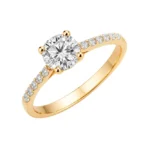
- Alternative: CZ is a smart option for those who want diamond-like jewellery at a low cost. In the UK, it is often used in fashion pieces, engagement ring replicas, and travel jewellery, where looks matter more than value.
What Are the 4 C’s of Cubic Zirconia?
The four C’s of cubic zirconia (CZ) are Cut, Colour, Clarity, and Carat. These show how good a CZ stone looks. Unlike diamonds, CZ does not have an official grading system. Many UK sellers use their own scale, from A to AAAAA (5A), to rate quality.
- Cut: The cut affects how bright the stone looks. It controls how light enters and shines back out. A well-cut cubic zirconia (CZ) sparkles strongly. Top-grade stones are cut with the same care as diamonds. Common shapes include round, princess, cushion, and oval. Some CZ stones are also cut into fun shapes like hearts or triangles.
- Colour: The best cubic zirconia (CZ) stones are clear and colourless, just like top diamonds. CZ is naturally clear, but small amounts of colour can be added. This can make shades like red (ruby), green (emerald), blue (sapphire), or purple (amethyst). In the UK, colourless CZ is most popular for engagement and wedding jewellery.
- Clarity: High-quality CZ is flawless. It has no marks or spots inside or outside. This makes it look clean and bright. Because CZ is made in labs, each stone has the same perfect look. The smooth surface and clear centre help it shine like a diamond.
Carat (Weight): Cubic Zirconia (CZ) is heavier than a diamond. A one-carat CZ looks a bit smaller than a one-carat diamond, even if they’re the same size in millimetres. Because CZ costs less, people can buy bigger stones for rings, pendants, and earrings. Carat size does not raise the price much, so large, bold designs are easy to afford.
Key Differences Between Cubic Zirconia and Diamonds
Cubic zirconia (CZ) and diamonds look alike at first glance, yet their structure, durability, and value are very different. Understanding these differences helps buyers and jewellers choose the right stone based on purpose, budget, and long-term use.
Comparison Table: Cubic Zirconia vs Diamond
| Feature | Cubic Zirconia (CZ) | Diamond | Key Insight |
| Origin | Lab-created synthetic stone | Naturally formed deep within the Earth | CZ is made in laboratories; diamonds are mined from natural deposits. |
| Composition | Zirconium dioxide (ZrO₂) | Pure carbon (C) | CZ is a man-made mineral; diamonds are pure carbon crystals. |
| Hardness (Mohs Scale) | 8–8.5 | 10 | Diamond is the hardest natural material; CZ can scratch with wear. |
| Brilliance (Light Reflection) | Strong dispersion, rainbow-like fire | Crisp white sparkle | CZ reflects more coloured light; diamonds reflect white light more sharply. |
| Refractive Index | 2.15–2.18 | 2.42 | Diamonds have higher brilliance under light due to a higher refractive index. |
| Clarity | Usually flawless, as it’s lab-made | May contain natural inclusions | CZ is perfect in clarity; inclusions help verify natural diamonds. |
| Density | 5.6–6.0 (heavier) | 3.5 (lighter) | CZ feels heavier than a diamond of the same size. |
| Thermal Conductivity | Poor heat conductor | Excellent heat conductor | Diamond testers detect authenticity using this property. |
| Durability | Strong but can dull over time | Extremely durable | CZ needs more care to maintain shine. |
| Colour Options | Naturally colourless or tinted | Natural and treated colours | CZ offers wider colour options at low cost. |
| Monetary Value | Low or no resale value | High resale and investment value | Diamonds retain or increase in value; CZ does not. |
| Price (Approximate) | £8–£25 per carat | £1,500+ per carat | CZ is far cheaper, suitable for affordable jewellery. |
| Use in the UK Market | Common in fashion and travel jewellery | Favoured for engagement and investment | CZ is popular in the UK for stylish, affordable designs. |
What are the Common Uses and Applications of Cubic Zirconia?
Cubic zirconia (CZ) is a synthetic substance made from zirconium dioxide (ZrO₂). It is strong, clear, and affordable. It is used mainly as a low-cost, brilliant diamond substitute in jewellery. Its durability and clarity also make it useful in medical, scientific, and industrial work. Uses range from dental crowns to engine parts in aircraft.
Jewellery
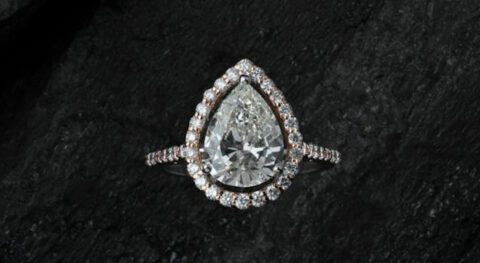
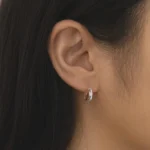
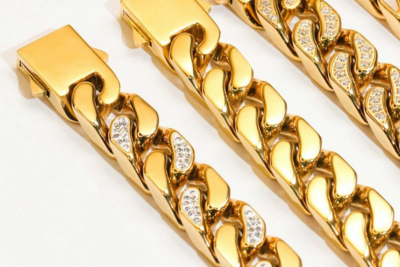
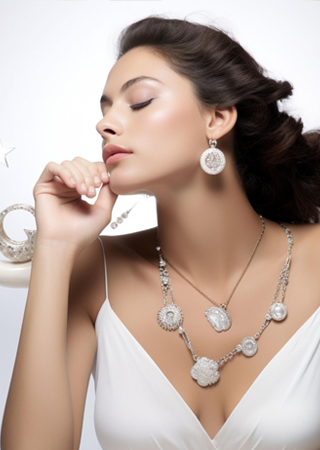
- Diamond Substitute: Cubic zirconia is the most popular diamond replacement today. It is used in rings, earrings, necklaces, and bracelets. The stone has a bright sparkle and a clear look that closely matches a diamond but costs far less.
- Fashion and Travel Jewellery: CZ is a favourite for affordable fashion jewellery. It is often used in “travel rings” and daily wear pieces. UK shoppers value it for its elegant look and low price, offering luxury style without the risk or cost of real diamonds.
- Variety of Colours: By adding metal oxides during production, CZ can appear in many colours. Options include blue, green, yellow, and red. These shades allow jewellers to imitate other gemstones such as emeralds, sapphires, and rubies.
Medical and Dental Applications
- Dental Restorations: Zirconia, a form of CZ, is a top choice for crowns, bridges, and implants. It is strong, long-lasting, and safe for the body. UK dentists use zirconia crowns for their natural colour match and durability.
- Surgical Instruments: Stabilised zirconia makes precise scalpels and tools. Its hardness and corrosion resistance keep edges sharp for repeated use in surgery.
- Orthopaedic Implants: Zirconia ceramics are used in hip and knee replacements. The material is biocompatible, meaning it works well with body tissues and lasts a long time.
- Scaffolds for Bone Regeneration: New studies explore 3D-printed zirconia structures to support bone growth. These may help repair or replace damaged bone in the future.
Industrial and Optical Uses
- Refractories: Zirconia resists heat and corrosion. It is used in furnaces, kiln linings, and crucibles that operate at very high temperatures.
- Wear-Resistant Components: Its hardness and strength make it ideal for seals, valve seats, and bearings. These parts face heavy wear, so they need durable materials.
- Optical Elements: Yttrium-stabilised cubic zirconia (YCZ) is used for lenses, prisms, and filters. Its high clarity and refractive index make it useful in cameras, car sensors, and optical devices.
- High-Performance Ceramics: Engineers use zirconia for tools and lab equipment that must handle heat and pressure. It performs well in cutting tools and laboratory crucibles.
- Thermal Barrier Coatings: In aerospace, zirconia protects jet engine parts. Its low thermal conductivity keeps engines cooler and improves performance and safety.
Scientific and Aesthetic Applications
- Oxygen Sensors: Zirconia ceramics are vital in oxygen sensors. These devices control combustion in cars and factories, cutting fuel use and lowering emissions.
- Laboratory Crucibles: Zirconia crucibles hold materials during high-heat testing. They resist chemical reactions and extreme temperatures.
- Watch Components: Luxury watches use zirconia ceramic cases and bezels. The material is hard, scratch-resistant, and has a sleek, polished look.
Caring for Cubic Zirconia Jewellery
Cubic zirconia is strong but still needs care to stay bright. Clean it often and store it safely to stop dullness, marks, or scratches.
Step-by-Step Cleaning Guide
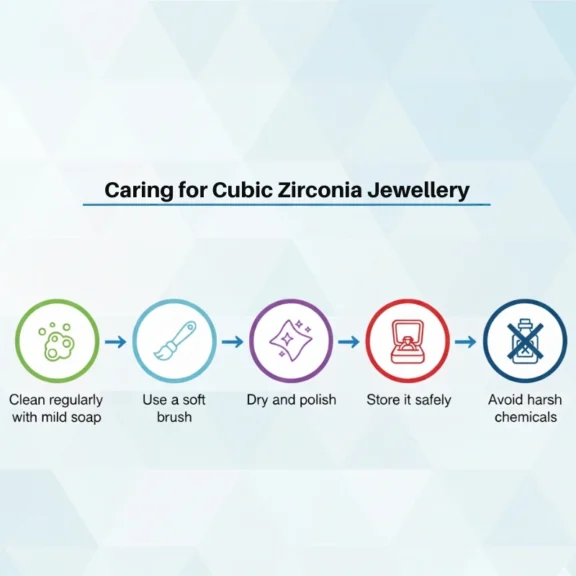
- Clean regularly with mild soap: Mix a few drops of mild dish soap with warm water in a small bowl. Oils, dirt, and makeup can build up and make your cubic zirconia lose its shine. Use gentle soap, such as Blue Dawn, to protect the finish.
- Soak the jewellery: Place your cubic zirconia pieces in the soapy water for 10–15 minutes. This softens any dirt or residue from skin or lotion.
- Use a soft brush: Use a soft toothbrush to clean behind the stone and around the edges. A baby toothbrush works well because its bristles are gentle and will not scratch the stone or metal.
- Rinse thoroughly: Rinse each piece under warm water to remove all soap. Make sure there is no residue left near the prongs or under the setting.
- Dry and polish: Pat dry with a soft, lint-free cloth. Gently buff the stone to bring back its shine and sparkle.
Maintenance Tips
- Avoid harsh chemicals: Keep cubic zirconia away from bleach, ammonia, and chlorine. These can damage the stone and weaken metal settings. Put on perfume, lotion, and hairspray before wearing jewellery to stop residue from building up.
- Store it safely: Store your cubic zirconia jewellery in a soft pouch or a lined box. This prevents scratches from other pieces. Many UK jewellers suggest using small fabric bags or separate sections in a jewellery box for storage.
- Remove before heavy activity: Take off your cubic zirconia jewellery before cleaning, swimming, or exercise. Impact, sweat, and chemicals can dull the shine or loosen the setting.
- Professional cleaning: Visit a jeweller once a year for a deep clean. A jeweller checks the prongs, polishes the metal, and restores the sparkle using safe tools. Regular care keeps cubic zirconia clear, shiny, and looking new. With the right cleaning and handling, your jewellery will keep its bright, diamond-like look for years.
Final Thoughts
Cubic zirconia shows how science and beauty can work together. It shines like a diamond but costs much less. Many people in the UK choose it as a smart and stylish diamond alternative. The stone is clear, strong, and made in an ethical way. Buyers who care about value and sustainability find it ideal. With simple care, CZ keeps its shine for many years. It suits both fashion and fine jewellery. It also has uses beyond design, such as in tools and industry. Cubic zirconia proves that elegance can be affordable and lasting.
Frequently Asked Questions (FAQs)
Q: Does cubic zirconia last?
A: Yes, cubic zirconia can last, but care matters. It has a hardness of 8–8.5 on the Mohs scale, so it’s strong but not as tough as a diamond. With daily wear, a CZ stone may last 1–3 years before dulling or scratching. With less frequent use and gentle cleaning, it can sparkle for many more years.
Q: Can you wear CZ every day?
A: Yes, you can wear CZ every day. It’s hard enough for normal use. Still, avoid harsh work, sports, or cleaning with it on. Over time, it may show small marks or lose shine. Wash it often with mild soap and warm water to keep it bright.
Q: Does CZ get cloudy?
A: Yes, it can. Dirt, oils, and tiny scratches make cubic zirconia look cloudy. Cleaning can fix light buildup, but scratches can cause a dull, hazy look that stays. Keeping your jewellery clean and stored well helps prevent this.
Q: Is cubic zirconia better than moissanite?
A: Moissanite is harder and lasts longer. It rates 9.25 on the Mohs scale, while CZ rates 8–8.5. Moissanite shines brighter and resists scratches better, but it costs more. CZ is cheaper and still looks very much like a diamond, making it a good low-cost choice.
Q: Can you use CZ for engagement rings?
A: Yes, you can use CZ for engagement rings. It’s pretty, clear, and affordable. Many people pick CZ as a starter or travel ring. But it’s softer than a diamond and can wear down faster with daily use.